Guide
How to Wash a Doona at Home, and When to Send It Out
Most doonas can be washed at home if you have the right machine and the patience to dry them properly. Some cannot. Here is how to tell, and how to do it well.
Step 1: find out what is inside
The filling decides everything, and the care label usually tells you what it is. If the label is gone, the feel is a good guide: synthetic filling is light and springy, feather and down is soft and moves around inside the channels, and wool is denser and heavier.
- Synthetic (polyester, microfibre): the easiest to wash at home. Warm, gentle cycle, ordinary mild detergent.
- Feather and down: washable when the label allows it, but slow to dry and prone to clumping. Use very little detergent and plan for a long dry.
- Wool: usually not machine washable. Warm water and agitation felt the wool and the doona goes flat and lumpy for good.
Step 2: check your machine is big enough
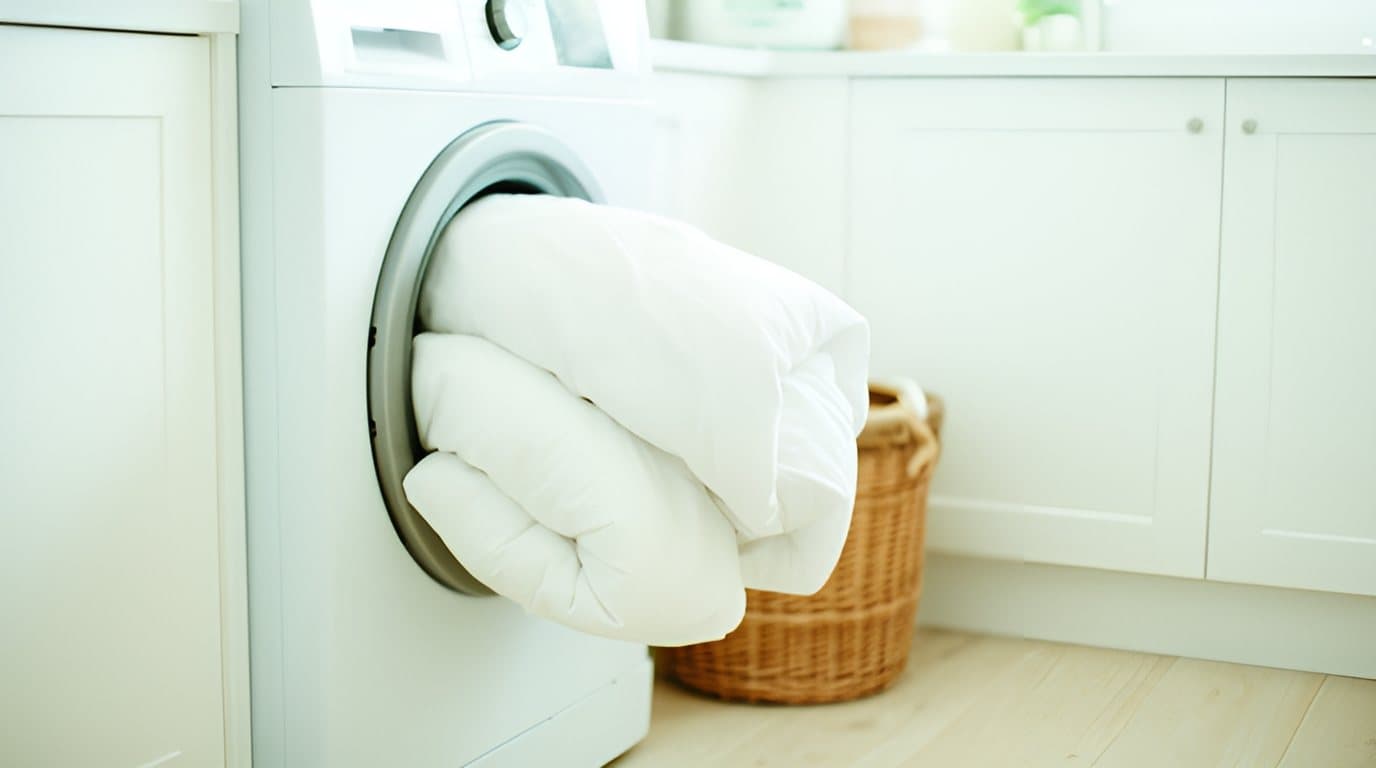
Put the doona in the drum dry and look. If it fills the drum completely, there is no room for water and detergent to move through the filling, so it comes out wet rather than clean, and the extra weight is hard on the machine. A front loader without a central agitator is gentler than a top loader that has one.
If it does not fit with room to spare, a laundromat's large machines or a professional clean are the better choice.
Step 3: wash it gently
- Wash the doona on its own, so it has the whole drum.
- Use a small amount of mild detergent; too much is hard to rinse out of the filling.
- Choose a gentle or bulky cycle and the temperature the label gives.
- Add an extra rinse to clear the last of the detergent.
- Skip fabric softener, which coats the filling and makes it clump.
Step 4: dry it all the way through
This is where home washing usually goes wrong. A doona can feel dry on the outside while the filling in the middle is still damp, and damp filling grows mould. The smell often shows up a week later, when the doona is back on the bed.
- In a dryer: low heat, with two or three dryer balls or clean tennis balls to break up clumps. Stop every half hour or so to shake it out and feel for cool, heavy patches.
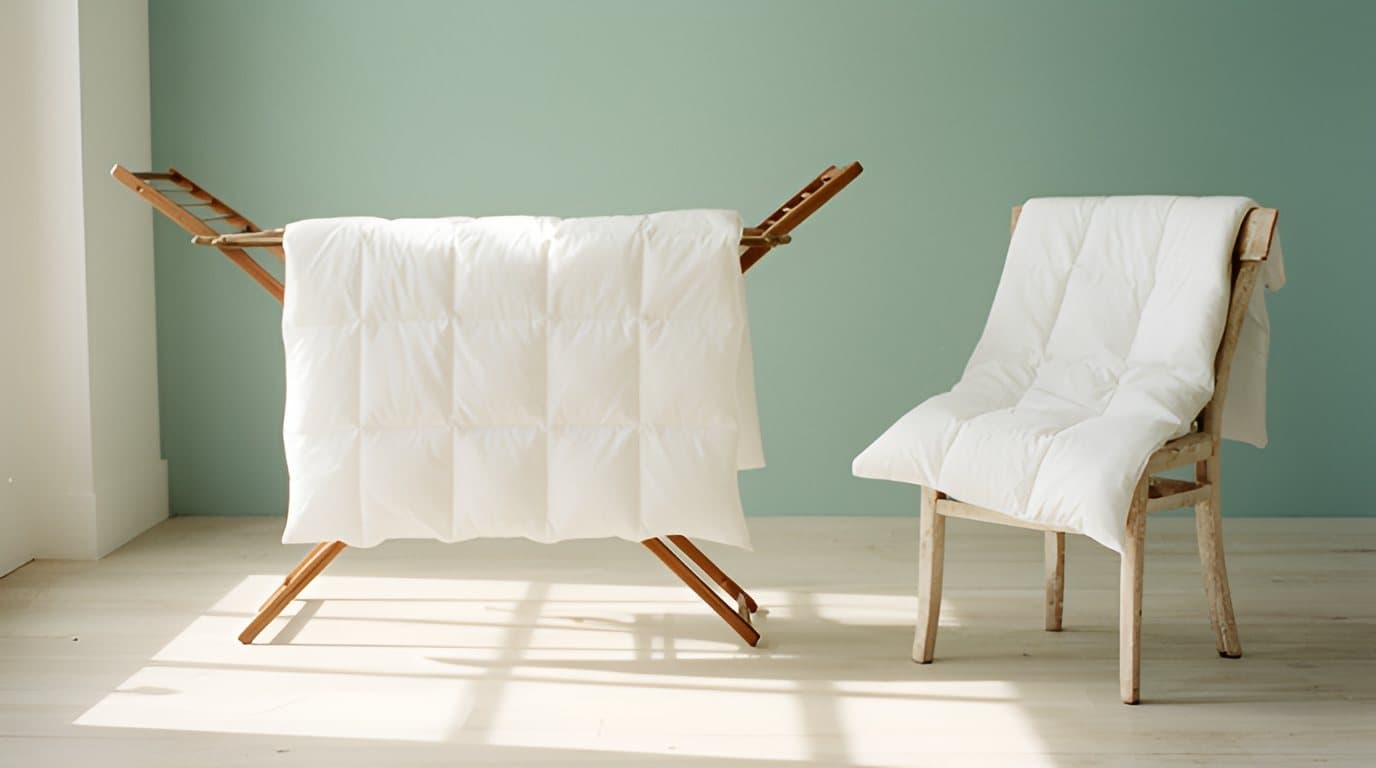
- On the line: spread it over two lines if you can, turn it and shake it through the day, and allow a day or two. Sydney's humid days slow this down a lot.
- Before it goes back on the bed: squeeze the thickest parts. If any part feels cool or heavy, keep drying.
When to send it out instead
- The label says dry clean only, or the doona is wool
- The doona does not fit your machine with room to move
- It is a large feather and down doona and you have no dryer
- There are stains you do not want to set with heat
- A run of humid weather means it will not dry on the line
We clean doonas in commercial machines and dry them through, and we check the filling and care label first so each one gets the method it needs. A single is $35, a double or queen $50, a king $60 and a super king $70, collected from your door. You can read how we handle each doona in our doona cleaning guide, or see blankets and mattress toppers on the bedding page.
How often to wash a doona
Once or twice a year is enough for the doona itself, at the end of winter and before it goes back on the bed. The cover is a different matter: wash it with your sheets, every week or two. For everything else in the linen cupboard, our washing schedule guide has the full list.
FAQ
Doona washing questions
Can you put a doona in the washing machine?
Usually, if the care label allows it and the machine is big enough. Most synthetic doonas and many feather and down doonas are machine washable on a gentle cycle. The test is room to move: if the doona fills the drum with no space left, the machine is too small to clean it or rinse it properly.
How do you dry a doona properly?
All the way through. Tumble dry on low with two or three dryer balls or clean tennis balls, stopping to shake it out and check for cool, heavy patches in the middle, or line dry in the sun, turning it and shaking it over a day or two. A doona that feels dry on the outside can still be damp in the filling, and that is how mould starts.
Can you wash a wool doona?
Only if the care label says so. Some wool doonas are made to be washed on a wool cycle, but most are not, because agitation and warm water felt the wool. Air it in the sun, spot clean small marks, and send it to a professional for a full clean.
How often should you wash a doona?
Once or twice a year is enough for most homes, at the end of winter and before it goes back on the bed. Wash the doona cover far more often, about every one to two weeks, with your sheets.
How much does it cost to have a doona cleaned?
With us, a single doona is $35, a double or queen $50, a king $60 and a super king $70, plus $10 pickup and delivery per order. Bedding is back within 48–72 hours.

 Serene WashSydney
Send us the doona instead
Doonas, blankets and mattress toppers collected from your door, cleaned and dried all the way through, back within 48–72 hours.